The bees of Piazza Santissima Annunziata

The Bees of Piazza Santissima Annunziata

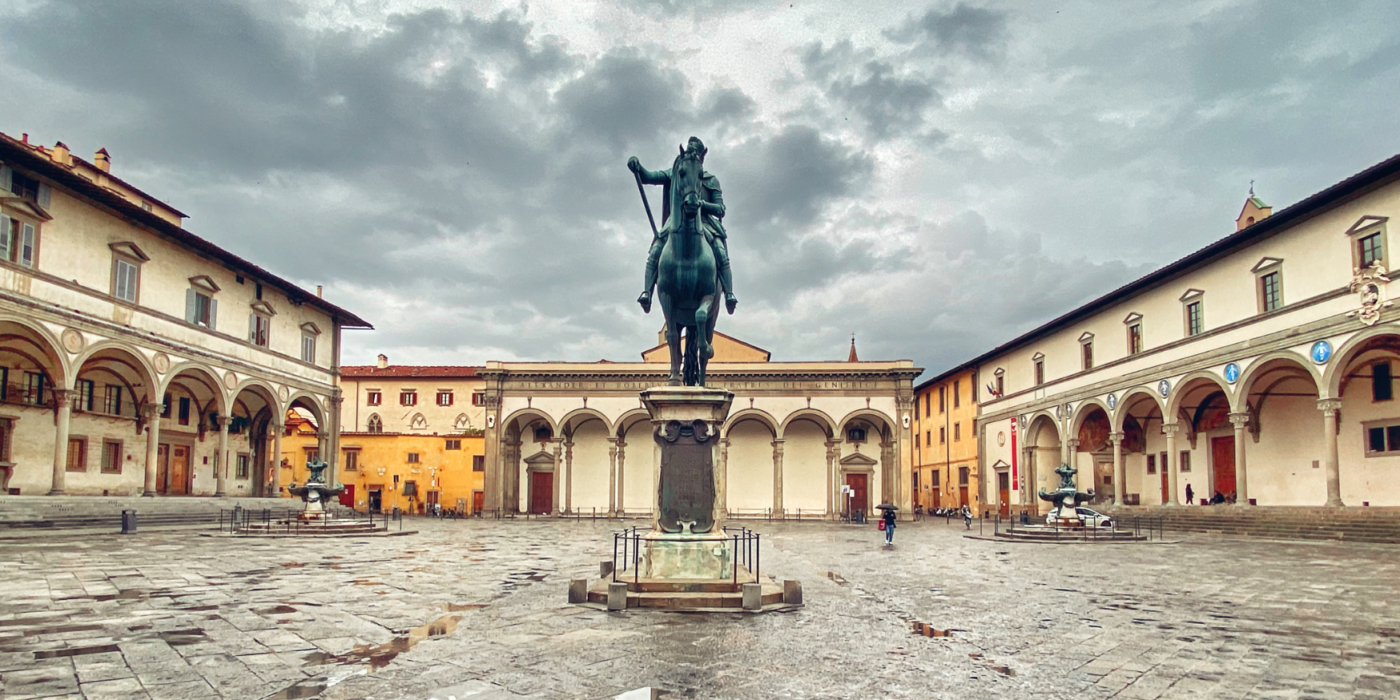
Piazza Santissima Annunziata is one of the most important and ancient squares in Florence, located in the heart of the city, near the Duomo and Piazza San Marco. The square is dominated by the majestic facade of the Basilica of Santissima Annunziata, a masterpiece of Florentine Renaissance architecture designed by Filippo Brunelleschi and Michelozzo. The church is renowned for its architectural perfection and for housing significant works of art. Additionally, the square is home to the famous Ospedale degli Innocenti, another remarkable example of Renaissance architecture, which for 400 years sheltered, cared for, and raised many orphaned or abandoned children.

The History and Symbolism of the Bees

The history of Piazza Santissima Annunziata dates back to ancient times when the area was an important site for public events, religious celebrations, and court ceremonies. It is a symbolic place, closely linked to the history of Florence and the Medici family, who left their mark on many of its buildings. Scattered across the stones of the square, several decorative elements can be found, including sculpted bees, a symbol of the Medici dynasty.

The use of bees as a symbol dates back to Catherine de’ Medici, who adopted them as her personal emblem. Later, her descendants continued to use them. Bees symbolically represent tireless work, diligence, and order—values that the Medici sought to convey through their rule.

The Monument of Ferdinando I de’ Medici

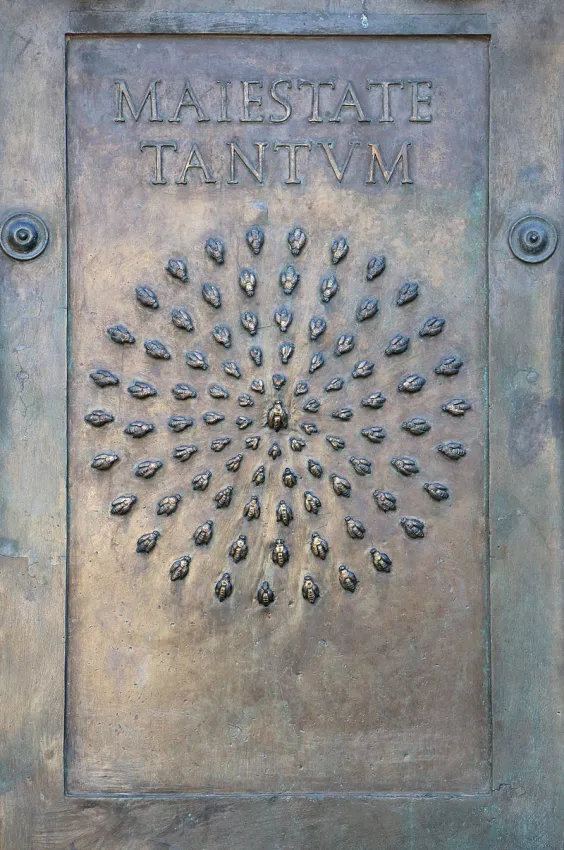
At the center of the square stands the equestrian monument of Ferdinando I de’ Medici, Grand Duke of Tuscany, sculpted by Giambologna and Pietro Tacca in 1608. Ferdinando I was a prominent member of the Medici family, passionate about art, science, and mathematics, and a close friend of Galileo Galilei. According to legend, the Grand Duke requested that Giambologna depict a swarm of bees behind the pedestal, beneath the statue of the horse, with a queen bee at the center, accompanied by the motto “MAJESTATE TANTUM.”
a timeless cultural heritage

The statue was cast using bronze from the cannons of Turkish ships defeated during the military campaigns of the Order of Saint Stephen. Under the horse’s belly, an inscription commemorates these victories with the phrase “De’ metalli rapiti al fero Trace.” Meanwhile, Ferdinando is depicted wearing the cross of the order around his neck. In this artistic representation, Ferdinando I de’ Medici is the queen bee at the center, governing the surrounding bees that symbolize the people of Florence.

The bees of Piazza Santissima Annunziata are more than just a decorative element—they hold a deep symbolic meaning within the historical and artistic fabric of the city. Through them, Florence narrates its grand past and its connection to long-standing traditions, which can still be admired today as a testament to a cultural heritage that never ceases to captivate.

Ponte Vecchio the oldest bridge in Florence

Ponte Vecchio: A Symbol of Florence

Ponte Vecchio is one of the most iconic and fascinating monuments in Florence. It is not only an engineering masterpiece but also a symbol of the city and Florentine culture.

A Bridge Between Two Banks

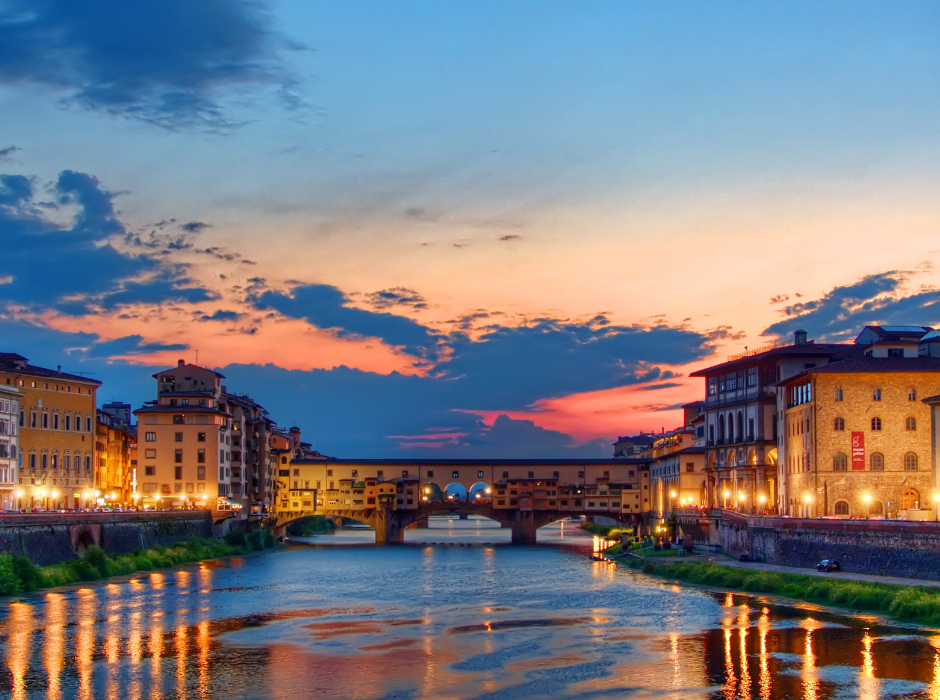
Ponte Vecchio, the oldest bridge in Florence, connects the two banks of the Arno, standing between the two parts of the city that Florentines call ‘diquaddarno’ and ‘diladdarno.’ On one side lies the postcard-perfect historic center with the Duomo and Piazza della Signoria, while on the other extends the Oltrarno, one of the most authentic areas of the city, where artisan workshops intertwine with innovative restaurants and hidden gardens.

A History Spanning Seven Centuries

With nearly 700 years of history, Ponte Vecchio has much to tell. From its medieval origins to Renaissance renovations up to the present day, this pedestrian bridge is crossed daily by thousands of people. Likely dating back to Roman times, the original structure was destroyed by a flood of the Arno in 1117 and subsequently rebuilt multiple times. The current appearance dates back to 1345 when it was reconstructed in stone by architect Taddeo Gaddi under the supervision of Florence’s rulers.

The Vasari Corridor: A Secret Passage

In 1565, architect Giorgio Vasari built the “Vasari Corridor” for Cosimo I, an elevated passage connecting Palazzo Vecchio with Palazzo Pitti. This corridor, about 760 meters long, was completed in just five months to allow the Medici family to move safely between their residences without mingling with the crowd. The passage, which crosses the bridge’s shops, represented a significant architectural innovation of the time.

A Commercial Hub Over the River

Over the centuries, the bridge has taken on different functions and hosted various businesses. Originally, the shops were occupied by butchers, fishmongers, and artisans, but in the 15th century, under Medici rule, they were replaced by goldsmiths and jewelers, a tradition that continues to this day. The decision to allocate the bridge to these businesses was made to boost the city’s economy and maintain control over commercial activities.

A Rare Inhabited Bridge

Ponte Vecchio, the oldest bridge in Florence, is one of the few “inhabited bridges” still in existence worldwide—bridges that permanently host commercial or residential structures. Its unique architecture is distinguished by three arches, with the central one higher than the others. The structure, built in pietra serena, gives the bridge its characteristic gray color and ensures its stability and durability over time. Constructing the bridge in stone instead of wood allowed it to withstand the Arno’s floods and become a strategic point for trade between the river’s two banks.

The Bridge’s Shops: Between History and Tradition

The shops that adorn the bridge, now mostly occupied by jewelers and artisans, once housed greengrocers and butchers. In the 16th century, city authorities required butchers to move to the bridge to keep the central streets clean and prevent meat waste from being dumped in inhabited areas. With the construction of the Vasari Corridor, butcher shops were deemed inappropriate, and in 1593, they were evicted to make way for goldsmiths, who have since made the bridge famous for Florentine jewelry craftsmanship. To honor this tradition, a fountain featuring the bust of Benvenuto Cellini, the greatest Florentine goldsmith, sculpted by Raffaello Romanelli, was placed in the bridge’s central terrace.

World War II and the Bridge’s Survival

One of the most significant historical events related to Ponte Vecchio was its survival during World War II. In 1944, during the German retreat, all the bridges in Florence were destroyed to slow the Allied advance, but Ponte Vecchio was miraculously spared. The reasons behind this decision are still debated today: some argue that the Germans wanted to preserve such an important city symbol, while others believe that Florentines themselves prevented its destruction.

A Bridge That Withstands Time

Thanks to its resilience, Ponte Vecchio remained intact, and its survival has only increased its symbolic value. After the war, the bridge underwent restorations to repair damaged parts, maintaining its original appearance unchanged.

A Timeless Tourist Attraction

Today, Ponte Vecchio, the oldest bridge in Florence, is one of the city’s main tourist attractions, visited by millions of people from around the world every year. Its shops have become a must-visit for lovers of jewelry and high-quality craftsmanship. Walking across Ponte Vecchio means taking a journey through time and immersing oneself in one of the city’s most romantic places.

A National Artistic Heritage

Recognized as a national artistic heritage in 1901 by the General Directorate of Antiquities and Fine Arts, Ponte Vecchio continues to stand as a living testimony to Florence’s history and identity. It is not just a bridge, but a piece of history that still tells the tale of the past and the beauty of a timeless city.

Foto Articolo: Web roialty free