
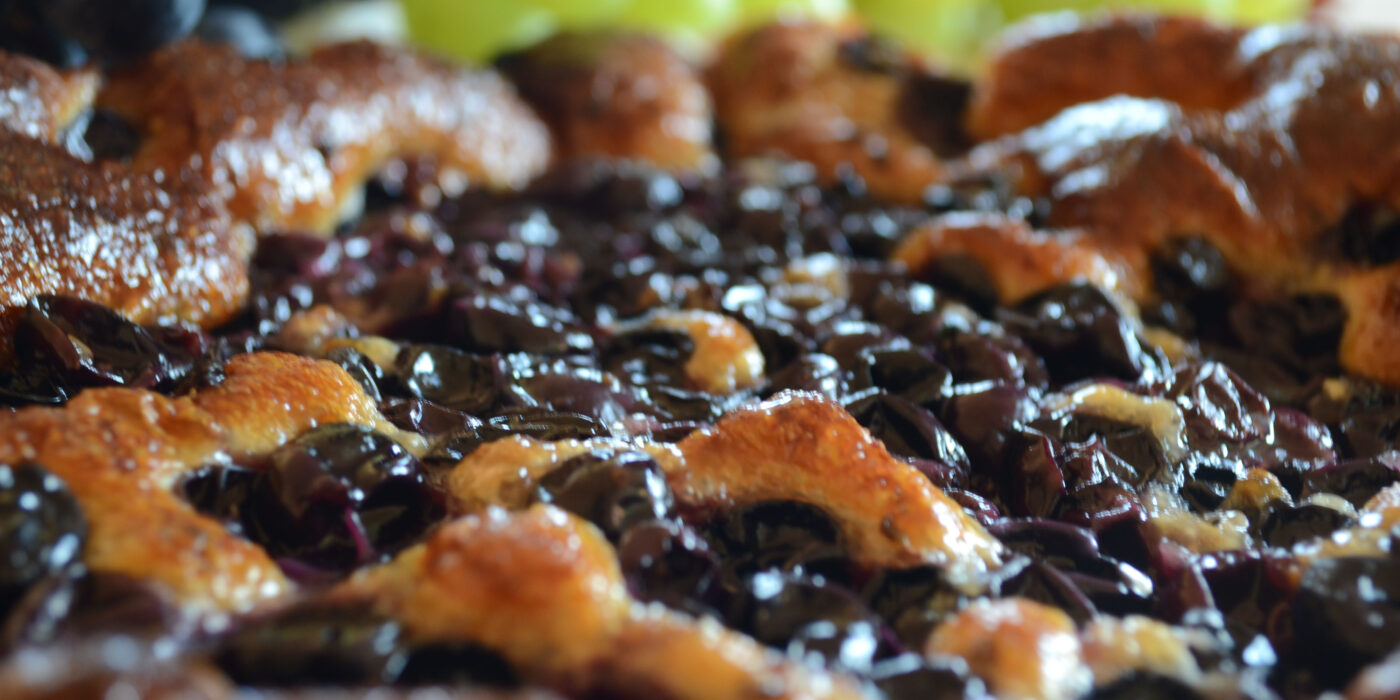
Among the scents that announce autumn in Florence, none evokes the convivial spirit of the harvest quite like grape focaccia. Sweet, yet rooted in the world of bread. Simple in form, yet capable of telling the story of a city and its countryside better than many other traditional specialties.
Origins of a Tradition: Florence and Chianti as One
The history of grape focaccia is deeply connected to the rural culture of Tuscany. Around the mid-twentieth century, in the hills of Chianti, the grape harvest was not only an agricultural process but a true communal ritual. Men and women spent long days among the vines, and the freshly picked grapes often made their way into bread dough. This is how this rustic focaccia took shape — enriched with bunches of grapes, sugar, and Tuscan extra virgin olive oil — the perfect fuel for those working tirelessly in the vineyards.
Over time, the recipe crossed from the countryside into Florence’s urban bakeries, becoming a beloved city tradition without losing its rural soul. Even today, in neighborhoods far from tourist routes, bakeries preserve the original preparation: two layers of dough, generously filled in the middle, and covered again on top with grapes that burst in the oven, releasing their violet sweetness.
The Harvest and the Grapes that Define It
Grape focaccia Florence would not have the same character without a very specific ingredient: the grape. Traditionally, Canaiolo is used — a wine grape with thick skin and deep color, once essential in Chianti blends. Baking it into focaccia was a way of honoring the fruit that ensured sustenance and future for farming families. Today, when dark clusters appear in Florence’s markets in late summer, locals know the moment of the first slice has arrived.
A Popular and Cultural Staple
What makes this specialty so distinctly Florentine is its popular soul. It never aspired to the elegance of elaborate patisserie, but to the sincere pleasure of something made to be shared. Every bakery, every family has its own version, and debates are common: softer or thinner, sweeter or with that slight savory note that defines so much of Tuscan cuisine.
Where to Find It in Florence Today
In September and October, the unmistakable aroma of grape focaccia fills streets and piazzas. Historic bakeries in the city center bake it daily, while in neighborhood markets it becomes both children’s afternoon snack and adults’ quick break. For visitors arriving in Florence at this time of year, a still-warm slice offers one of the most direct ways to feel connected to local life.
A Tradition That Endures
To taste grape focaccia in Florence is to embrace the collective memory of a land that never forgets its roots. It is a simple gesture, joining past and present, countryside and city, labor and celebration. A specialty that continues to surprise with its authenticity, returning each harvest season as a small but powerful celebration of identity.